• Skip to primary navigation
  • Skip to main content
Contact
Beech Village Hall logo

clientsite.uk

  • What’s on
    • What’s on
    • Browse events
    • Booking information
    • Beyond Beech
  • Health & Wellbeing
    • Health & Wellbeing
    • Meet our Practitioners
    • Join our Practitioner community
  • Hire a space
    • Hire a space
      • Hire a space
      • Celebrations and Life Events
      • Children’s parties
      • Commemorations
      • Groups and organisations
      • Wedding receptions
    • Check availability
      • Check availability
      • Main Hall availability
      • The Wellhouse availability
    • Find caterers and suppliers
    • Packages and pricing
  • Community
    • Community
    • Community Groups and Clubs
    • Members’ corner
    • Browse Volunteer roles
    • Community information

Coffee

How to use our coffee machine?

19 December, 2023

Please note that we do not normally hire out our coffee machine. Please contact us at bookings@beechvillage.org.uk if you would like to use it.
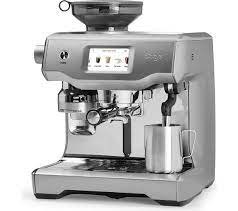
Sage Oracle Touch best practice:

Tips: www.youtube.com/watch?v=V8246awntvM

  1. Maintain the same quantity of beans in the hopper (regularly top up)
  2. Pre-warm portafilta by keeping in the brew head
  3. Pre-warm cups by keeping on warming tray of machine or use hot water
  4. Wipe down portafilta with clean damp paper towel before use
  5. Occasionally flush brew head by pressing brew without portafilta in place for 5 seconds and then wipe down with damp paper towel

Prepare coffee

Prepare milk

How to use Sage ORACLE Touch

Understand best practice in using the Sage Oracle Touch

Tips: Best practise on using Sage Oracle Touch

Add water


Add beans


Clean the machine

Empty the drip tray


Our Espresso set up:

Our machine is set up to automatically dispense a standard ‘double Espresso’:

Coffee grinder setting of 15

Weight of ground coffee 20g

Brew time of 30 seconds

Delivers approx. 40 ml of Espresso
Coffee

19 December, 2023

Golden rules:

  1. Ask the customer how they prefer their coffee
  2. Start the milk preparation first
  3. One at a time

Heat!

  1. Make sure the cup is pre-heated
  2. Make sure the portafilta is hot (always keep it in the centre station)

The best way to learn is by practise… please arrange for some hands on practise by emailing bookings@beechvillage.org.uk

Our coffee

Our coffee beans

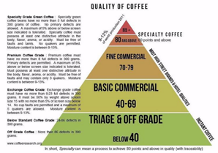
We source our ‘SPECIALITY’ grade arabica roasted coffee beans from Moon Roast who are a ‘specialist’ roaster;

Moon Roast:

Source coffee as directly from origin as we are able, and our high-grade, 100% Arabica beans comes straight from small farms in coffee-growing countries like Rwanda, Kenya and Guatemala. Our coffee is seasonally selected at the roastery through the process of sample roasting and cupping when shipments of new season coffee have landed.

Moon Roast Blend Composition
50% Brazil Fazenda Irubi
30% Colombia Monte Bonito
20% Guatemala Finca Filadelphia 


A quick guide to coffee drinks

The ‘coffee’ drink can be extracted from ground roasted coffee beans in a variety of ways. 

  • Espresso machine
  • Hand held espresso maker
  • Stovetop espresso maker
  • Aeropress
  • French press
  • Coffee bag
  • Vacuum / siphon pot
  • Percolator
  • Manual pour over coffee makers
  • Machine pour over coffee makers

We have selected to serve Espresso based coffee drinks.

Espresso is a method of brewing coffee that uses high water pressure and ‘tamped’ ground beans to make a small concentrated ‘shot’ that is also called an Espresso.

Espresso (/ɛˈsprɛsoʊ/ ( listen), Italian: [eˈsprɛsso]) is a coffee-brewing method of Italian origin,[1] in which a small amount of nearly boiling water (about 90 °C or 190 °F) is forced under 9–10 bars (900–1,000 kPa; 130–150 psi) of pressure (expressed) through finely-ground coffee beans. Espresso coffee can be made with a wide variety of coffee beans and roast degrees. Espresso is the most common way of making coffee in southern Europe, especially in Italy, Spain, Portugal, Switzerland, Southern France and Bulgaria.

Espresso is generally thicker than coffee brewed by other methods, with a viscosity of warm honey. This is due to the higher concentration of suspended and dissolved solids, and the crema on top (a foam with a creamy consistency).[2] As a result of the pressurized brewing process, the flavors and chemicals in a typical cup of espresso are very concentrated. The three dispersed phases in espresso are what make this beverage unique. The first dispersed phase is an emulsion of oil droplets. The second phase is suspended solids, while the third is the layer of gas bubbles or foam. The dispersion of very small oil droplets is perceived in the mouth as creamy. This characteristic of espresso contributes to what is known as the body of the beverage. These oil droplets preserve some of the aromatic compounds that are lost to the air in other coffee forms. This preserves the strong coffee flavor present in the espresso.[3] Espresso is also the base for various coffee drinks—including caffè latte, cappuccino, caffè macchiato, caffè mocha, flat white, and caffè Americano.

Source: Wikipedia

The Espresso ‘shot’ is the basis for a variety of coffee drinks based on adding extra water and or types of frothed milk.

Our coffee machine

Sage Oracle Touch best practice:

Tips: www.youtube.com/watch?v=V8246awntvM

  1. Maintain the same quantity of beans in the hopper (regularly top up)
  2. Pre-warm portafilta by keeping in the brew head
  3. Pre-warm cups by keeping on warming tray of machine or use hot water
  4. Wipe down portafilta with clean damp paper towel before use
  5. Occasionally flush brew head by pressing brew without portafilta in place for 5 seconds and then wipe down with damp paper towel


Our Espresso set up:

Our machine is set up to automatically dispense a standard ‘double Espresso’:

Coffee grinder setting of 15

Weight of ground coffee 20g

Brew time of 30 seconds

Delivers approx. 40 ml of Espresso

How to serve our coffees:

Name

Machine

setting


Qty of coffee

Cup size

Qty of milk

Qty of water

Notes

Espresso

BVH Espresso


40 ml (double)

3 oz (85 ml)

None

None

Machine set up is:

Coffee grinder setting of 15

Weight of ground coffee 20g

Brew time of 30 seconds

Delivers approx. 40 ml of Espresso

Macchiato

BVH Latte


40 ml (double)

3 oz (85 ml)

2 spoons

None

One or two spoons of milk froth on top of an Espresso

Cortado

40 ml (double)

6 oz (170 ml)

40 ml

None

Espresso topped with 50% steamed mill

Flat white


40 ml (double)

6 oz (170 ml)

120 ml

None

Espresso topped up with 2/3 steam milk and a fine layer of foam on top (<1 cm)

Latte

40 ml (double)

8 oz (227 ml)

180 ml

None

Espresso topped up with 2/3 steam milk and a fine layer of foam on top (1-2 cm)

Cappuccino

BVH Cappucino


40 ml (double)

10 oz (284 ml)

180 ml

None

Espresso topped with 1/3 steamed milk and 1/3 dry foam. A traditional cappuccino has an even distribution of espresso, steamed milk, and foamed milk (2-4 cm)

How to make one: www.youtube.com/watch?v=wRe3Z9ogDaA

Americano

BVH Americano


40 ml (double)

8 oz (227 ml)

None

140 ml

Water with Espresso added. 2/3’s hot water

How to make one:

www.youtube.com/watch?v=ZUI9F5jWjbk

Long Black

40 ml (double)

8 oz (227 ml)

None

120 ml

Water with Espresso added. 2/3’s hot water

  • About
  • FAQ
  • Legal